This week in Behind a Creative Life — where we encourage your own creativity — we look at a new kind of colouring book that helps me stay connected to creativity during the winter months. And why it just might be a perfect creative ritual for you too.
Reverse Colouring Books: The Perfect Creative Escape for Winter
Meet my new winter obsession
Every year, once the cold settles in, my creativity shifts. I still want to make things, but I don’t have the energy for big projects or new ideas. Winter is when I reach for the gentler, more mindless creative tasks — the ones that let me stay connected to making without asking too much of me. Colouring books, simple sketches, prompt books, the occasional paint-by-numbers… they all come out when the temperature drops.
It’s also the time of year when I leave my little studio behind and move into our warmer van.
For anyone new here: we’re living in static vans while we build a house in Scotland. My studio is inside our adjoining office van — a tiny, closet-sized space that’s perfect in summer but freezing in winter. Painting in there feels like painting outside. No amount of layers can make me want to sit at my desk long enough to get into flow.
So during winter, my “studio” becomes a corner of the couch in the living van — cosy, warm, and very small. I can’t keep many supplies around me, which is probably why this next thing has become such a joy.
Because this year, I found a book so addictive that it didn’t even make it to Christmas Day.
I chose it as my gift to myself… and then immediately opened it the moment it arrived.
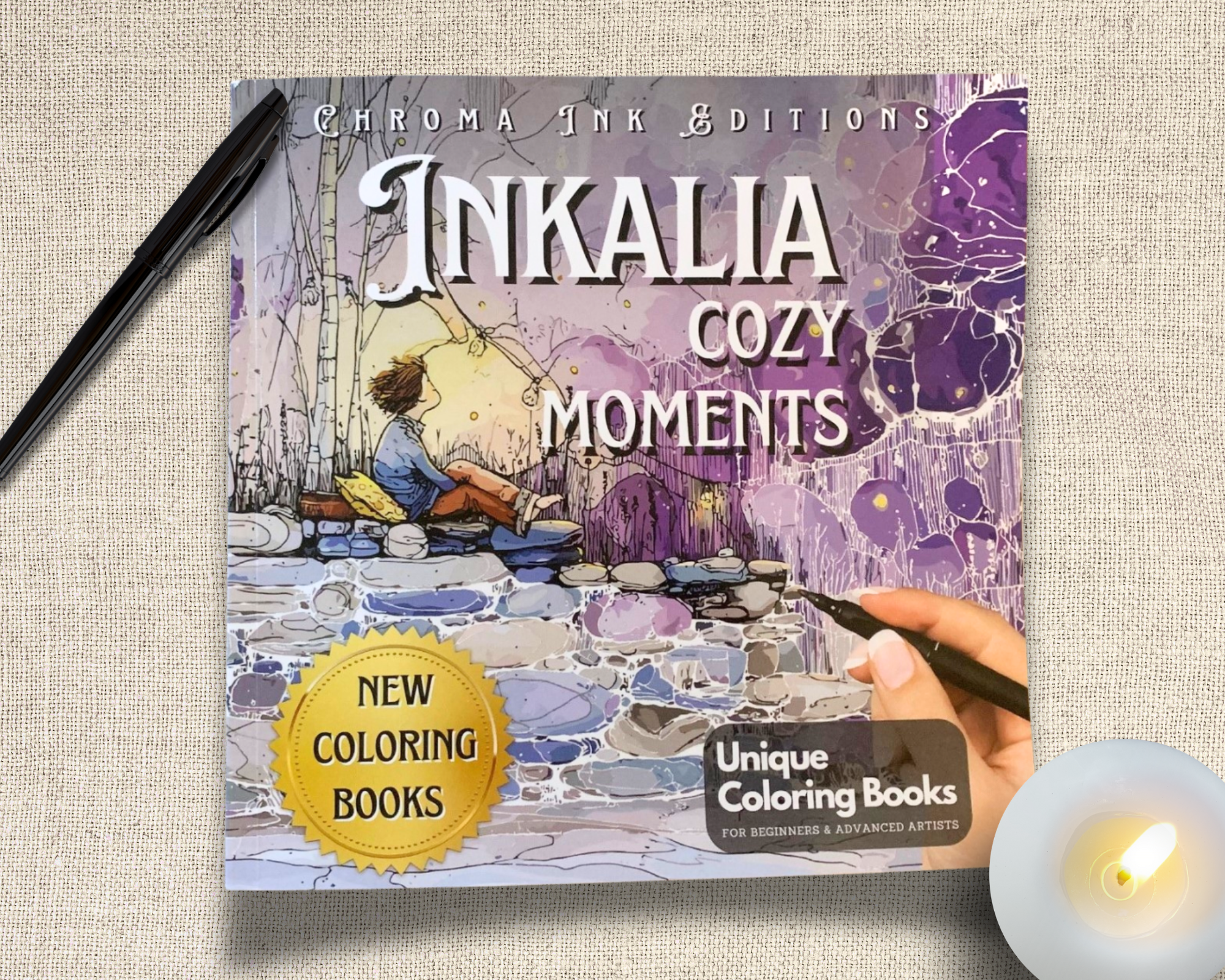
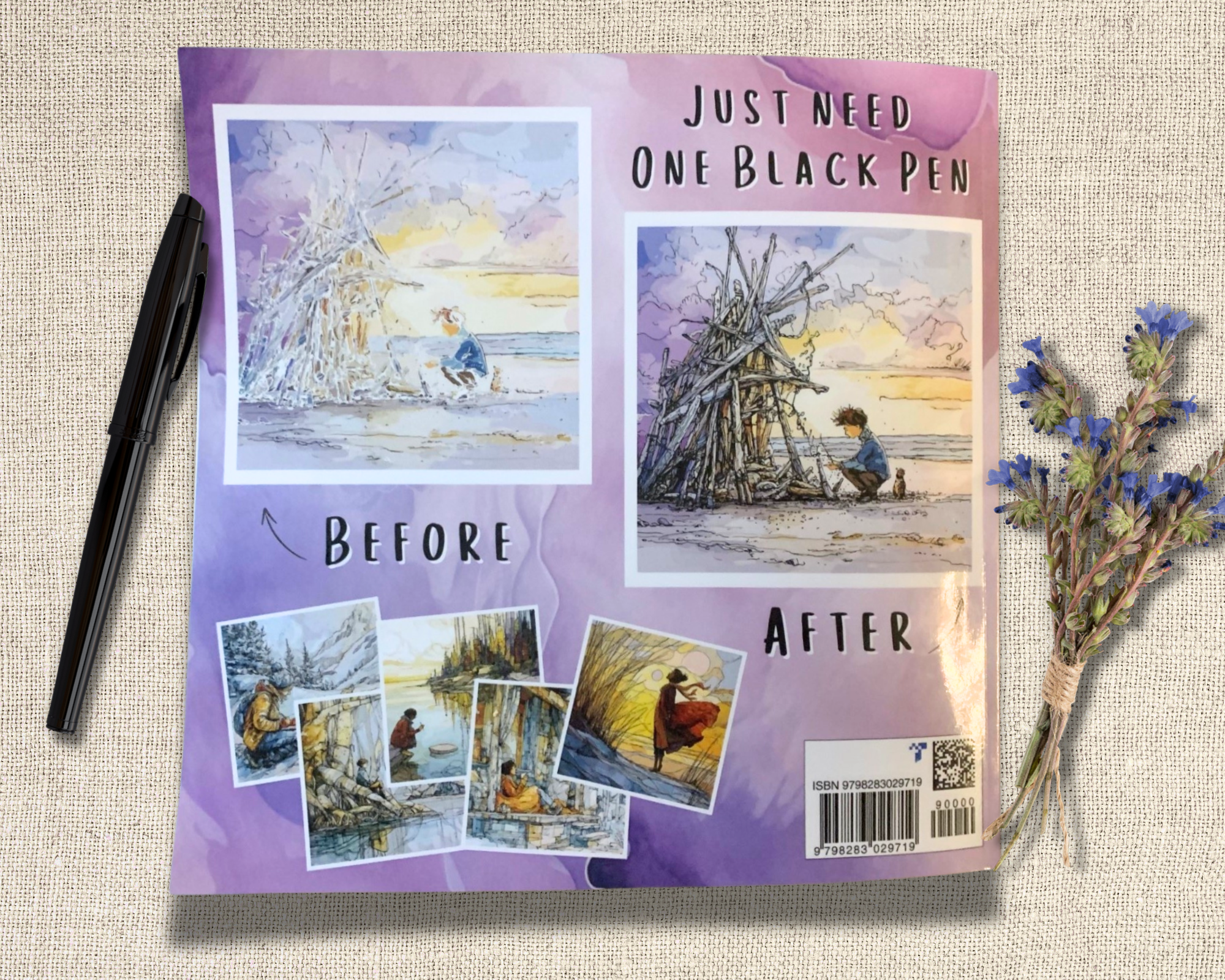
It’s called Inkalia – Cozy Edition, created by Chroma Ink Editions, and it’s a kind of reverse colouring book.
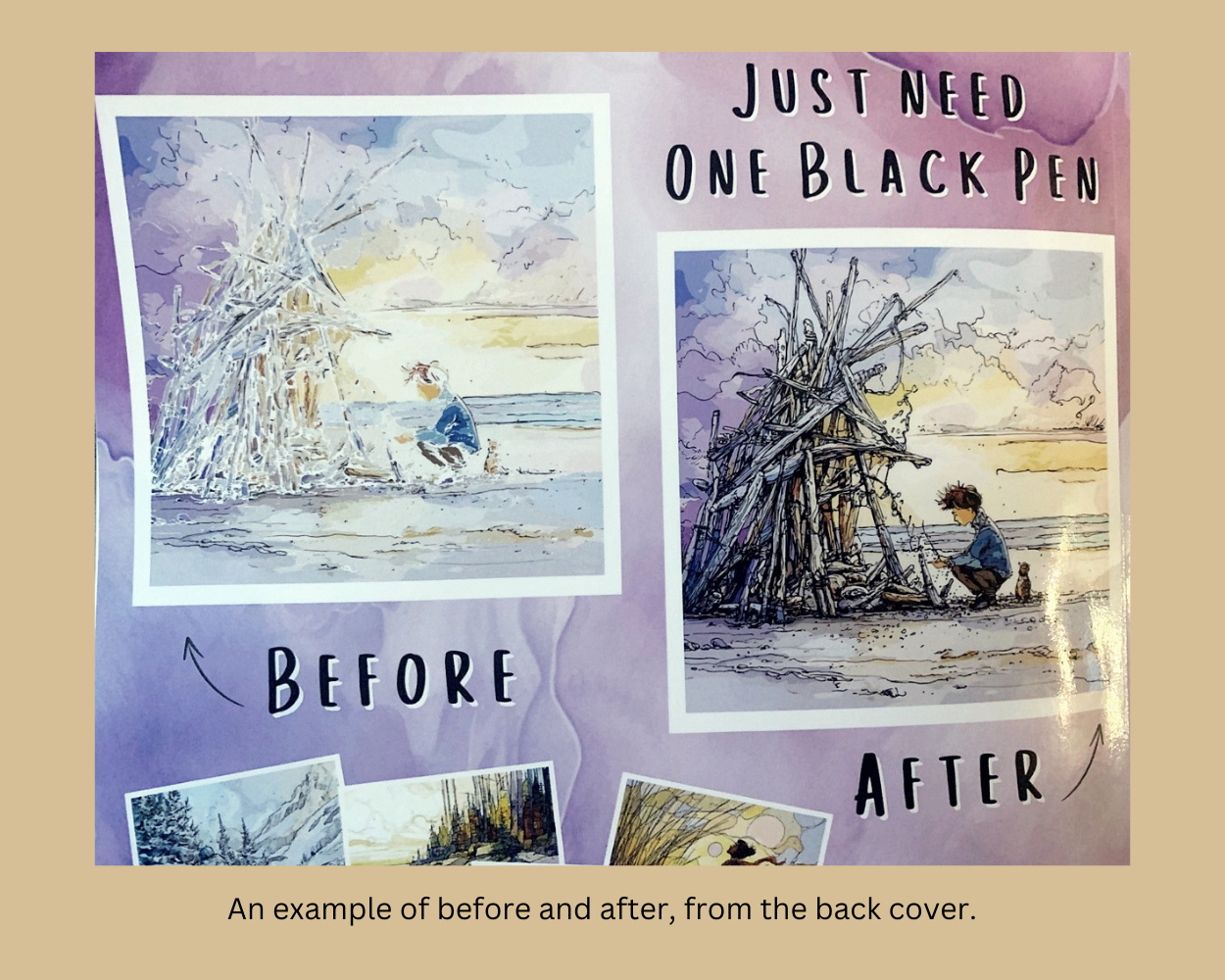
They give you the colours; you add the lines.
Not big, heavy colouring-book outlines — but light, organic shapes that you trace with a fineliner. The artwork is already softly painted in beautiful colours, and your job is simply to respond to the shapes, follow the rhythms, and make marks wherever the page leads you.
It’s doodling without the blank page.
Sketching without the pressure.
Drawing without needing an idea.
Exactly what winter asks of me.
Right-brain drawing, flow, and why this works so well
Scribbling works brilliantly for entering the creative flow state. Here’s why.
The left side of the brain loves symbols: house, tree, face. It wants everything labelled and known.
But drawing — genuine drawing — happens in the right brain, where you’re not thinking about objects at all. You’re thinking:
This line curves.
This mark is straight.
This angle meets that one there.
This shape overlaps just slightly.
That’s why scribbling helps. The left brain hates scribbling. There’s nothing for it to grasp onto. It gets bored and goes quiet — leaving space for the right brain to lead.
That’s when flow happens.
That timeless feeling of being absorbed and relaxed and gently creative.
This book takes you there instantly.
No pressure, no planning. You’re not drawing a “thing” — you’re simply responding to colour with line. A conversation between marks.
Even if you’re someone who can draw your own pieces beautifully, this book still has huge value: hand-practice, line confidence, right-brain immersion, and the joy of making something without needing to think.
It’s the creative equivalent of a writer reading someone else’s pages in the form of a novel or story, or a musician putting on a song someone else recorded — a way of staying connected to your craft during your “off” moments.
Tips for making the most of it
Here are a few things I’ve learned while happily filling page after page:
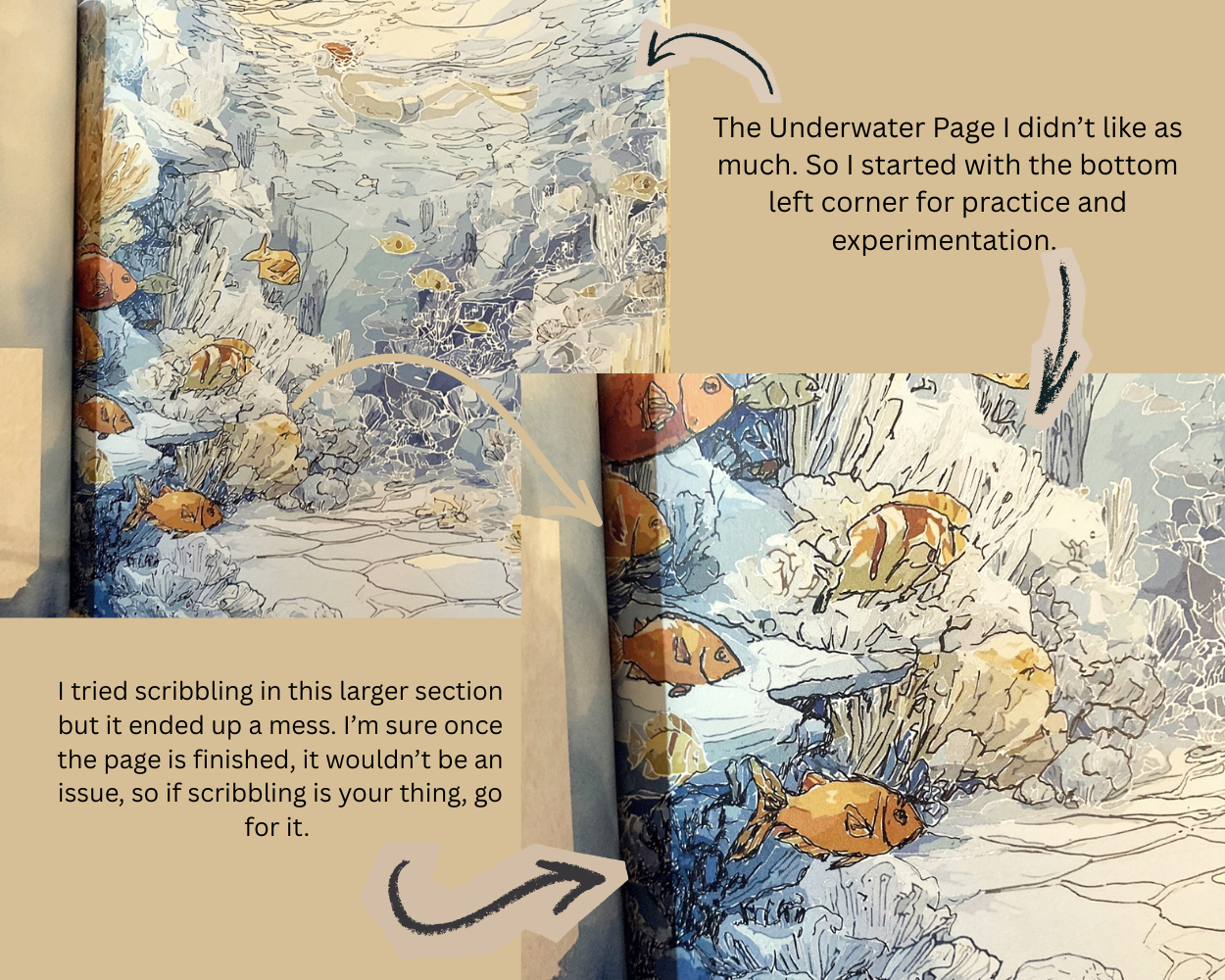
1. Start on a page you don’t love as much
And on that page, start with the bottom left corner (where it won’t be as noticeable). Just to test your line thickness, pen width, and approach.
(For me, that was the underwater scene. Underwater and I have never been friends.)
2. Thin pens work best
0.1 and 0.2 work beautifully.
0.05 was too hairline-thin for me, though some may love it.
0.5 is great for thicker lines, but swapping pens constantly interrupts flow — so sometimes it’s easier to use a thin pen and simply go over the line twice.
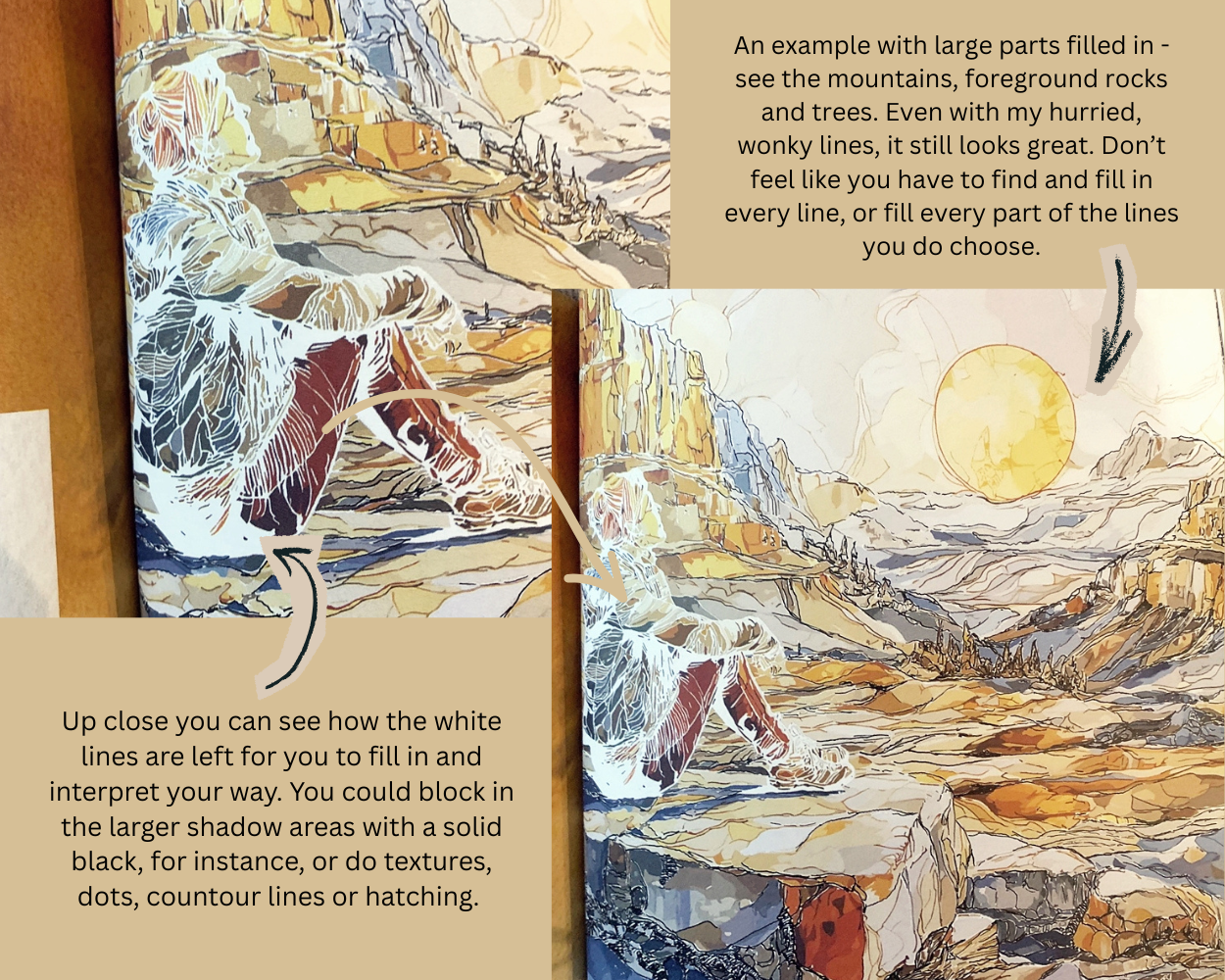
3. Leave white space
Don’t try to trace every line.
Don’t fill every section.
Let the page breathe.
4. Use contour or cross-hatching for thicker sections
I found scribbling in the bigger areas looked messy. (See the bottom left of the underwater page). Contours look intentional.
5. Adjust the lines however you like
Thicker, thinner, curved differently — make it yours.
6. Think “texture,” not line
Wood grain, tree bark, roots, stone, fabric — anything organic.
7. Try dots, dashes, broken lines
Particularly lovely on delicate shapes or distant objects.
8. Go even further with depth
Thicker lines up close, very thin dotted lines in the distance. Browns and greys are lovely too.
9. Don’t worry about ruining anything
These pages are so beautifully designed that your lines will always blend into something charming and whole.
10. One page takes around 2 hours
Depending on detail.
Perfect for cosy evenings, slow mornings, or weekly creative rituals.
More editions and where to look
Inkalia comes in several themes — cottages, cosy scenes, autumn pages, architecture, fairy-style illustrations — and I suspect the range will grow. I found mine on Amazon. There are a few other reverse-style books emerging too, though they’re still so new that there isn’t a perfect search term yet. You do need to dig a little.
If you end up trying one, I’d genuinely love to hear about it or see what you create.
You can write to me — my email is on our Contact Us page.
Until then… happy doodling, and happy winter creativity.
About the Author: Lisa Saul




 Pinterest
 YouTube